Dropping out of sixth form? Here’s what you could do next
Leaving sixth form can feel really daunting. It takes courage to realise it’s not the right thing for you, and telling people that you want to lead can be tough. But for a lot of people, leaving turns out to be exactly the right thing.
You’re not alone
Every year, thousands of 16 and 17-year-olds in the UK realise that a course that isn’t working for them. Recent government figures show around 4.6% of 16-17 year-olds were not in education, employment or training (NEET) in mid-2025. Importantly, that’s usually a temporary stage, not a permanent one. Most people move through it into work, training, or a different kind of course.
What your options actually look like
If you’ve left sixth form, or you’re thinking about it, you do need to be in some form of education until you are 18, but there are options:
- Look at college or a BTEC. A different environment and course structure can make a huge difference. It isn’t a “lesser” option, just a different one.
- Apprenticeships. Earn while you train, with a qualification at the end. Available in a huge range of industries, not just trades.
- Short courses and certifications. Sector-specific qualifications (first aid, coaching awards, technical certificates) can open doors faster than people expect.
- Get a job, and study on the side. Plenty of people combine paid work with part-time courses or professional qualifications relevant to what they want to do.
None of these need to be “the plan.” Often they’re just the next step — and the plan reveals itself later. Also consider volunteering. You will meet new people and that might turn into work for you. You could do this through something like DofE, or contact charities or other organisations directly.
A real story: James’s journey
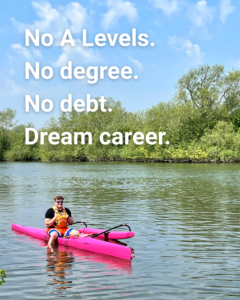
James dropped out of sixth form where he was studying for A-Levels, because the pressure was too much. What came next was so much better for him.
He got a job as a lifeguard, and started working toward paddlesport instructor qualifications alongside it. He completed his bronze, silver, and gold Duke of Edinburgh’s Awards. He picked up short pieces of work with various outdoor education organisations, building experience and contacts as he went.
Then he applied for a job in the SEND department at his old secondary school, got it and thrived. Working closely with students with additional needs, he recognised traits in himself that led him to pursue a formal autism diagnosis.
Today, James is a Chief Instructor. He holds qualifications as a powerboat driver, a Paddle UK-accredited SUP coach, canoe coach, and kayak coach, along with first aid and water safety certifications. He runs axe-throwing sessions, leads Duke of Edinburgh expeditions for young people, and has line management responsibility for seasonal coaches, something he says he’d never have believed possible a couple of years ago. He’s already working towards his next qualifications: climbing, instructor training, and white water safety.
It hasn’t always been easy, not for James, and not for his parents watching him find his way. But his path is real proof that you don’t need traditional academic qualifications to build a career you love.
If this is you (or your child)
A few starting points:
- Talk to someone. A careers adviser, a trusted teacher, or a service like the National Careers Service can help map out options you might not know exist.
- Look at apprenticeship listings in an area you’re even vaguely interested in. You don’t need to be certain, just curious.
- Notice what you already enjoy outside of school. James loved the water long before it became his career. That kind of clue matters more than it seems.
- Let the first step be a job, not a plan. You don’t need the whole route figured out, just the next right thing.
There’s no single right path after 16. Just the next right step for you.